
Dynamic Tape
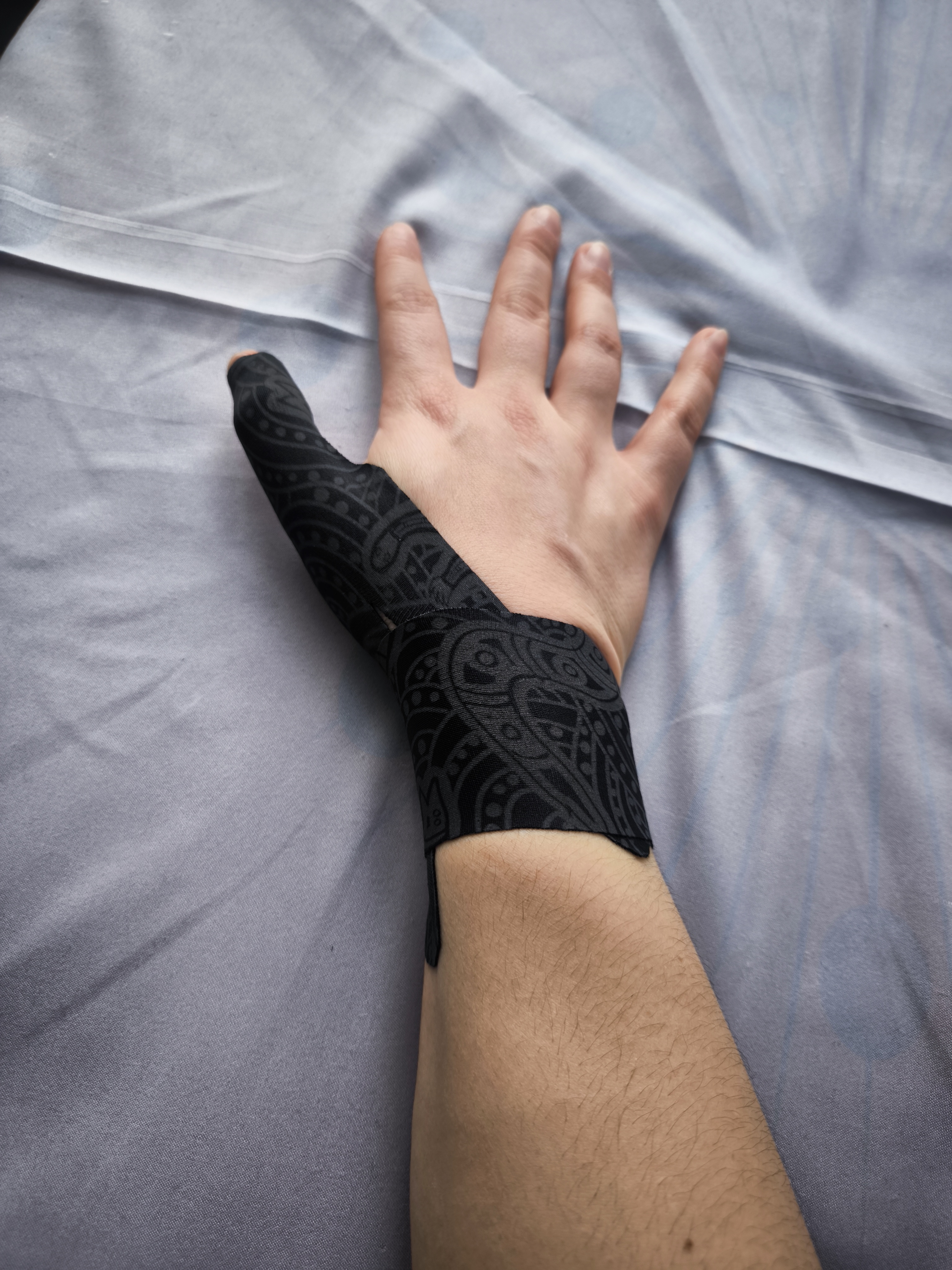
Dynamic Tape is a special type of highly elastic tape that can stretch to over 200% of its normal length, and in four directions (4-way stretch). Unlike conventional kinesiotape, it has no rigid endpoint and offers significantly stronger elastic resistance and recoil. It is precisely these properties that place it in an entirely separate category: it is not a kinesiotape or a rigid sports tape, but what is known as a biomechanical tape.
Depending on how it is applied and how far it is stretched, Dynamic Tape works like an elastic band or bungee cord. It absorbs load as the muscle or joint lengthens (the eccentric phase), stores it as elastic potential energy, and then returns it to the kinetic chain as the muscle shortens (the concentric phase). In this way, the tape can take on part of the external force, reduce the workload on injured, overloaded or weakened tissues, assist or restrict a given movement, and modify faulty movement patterns. All without limiting the range of motion.
Applying Dynamic Tape requires precise biomechanical analysis, an excellent knowledge of anatomy and kinesiology (both of the structures being targeted and of their connections throughout the entire kinetic chain), and clear clinical reasoning about the direction and magnitude of the force applied, since even a small amount of stretch in the tape can generate considerable resistance throughout the full range of motion.